Commercial mold remediation removes mold from businesses, multi-unit buildings and other non-residential properties under a written protocol. Texas requires a TDLR mold license for jobs over 25 contiguous square feet, with limited exemptions for owners and staff. Call the number on this page to be connected with a local mold company in Fort Worth.

What counts as commercial
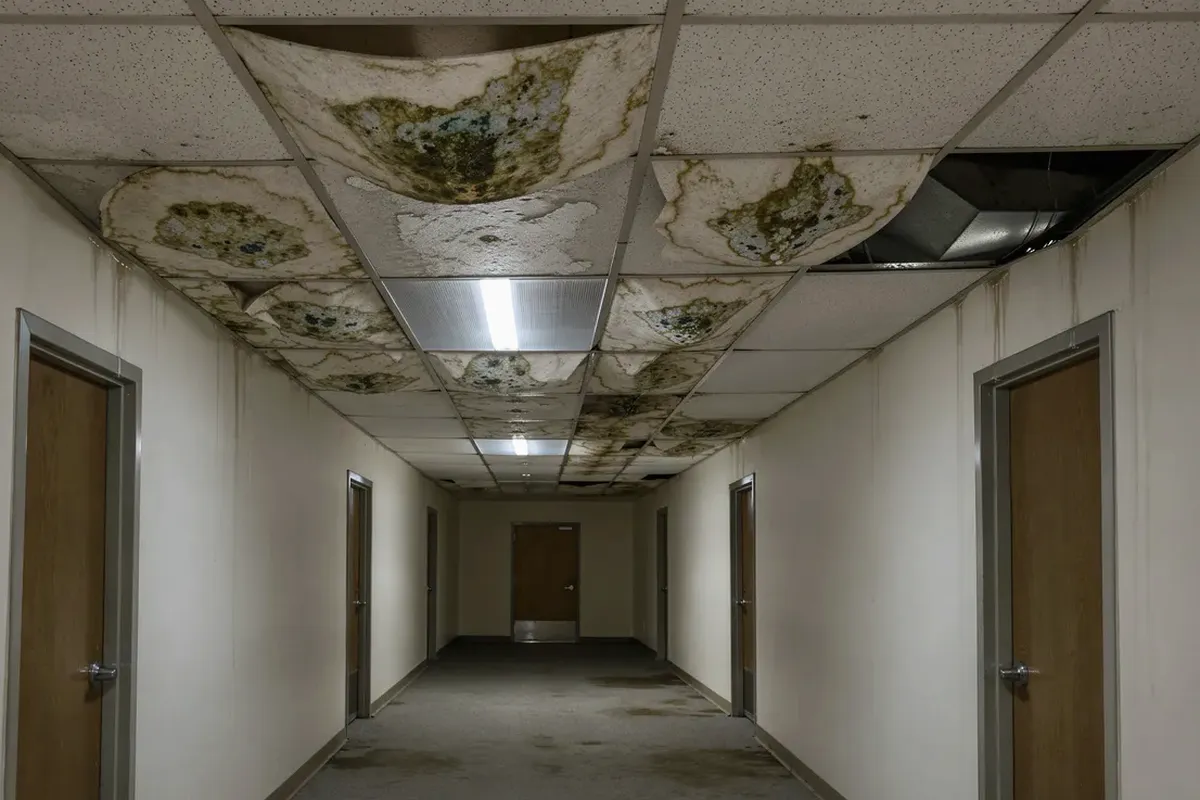
Commercial work covers offices, retail space, restaurants, warehouses, churches, schools and apartment buildings. Fort Worth has a large mix of older brick buildings and newer tilt-wall and slab construction, and the roof leaks, plumbing failures and rooftop HVAC condensation that feed mold look different in each. Hot summers keep cooling systems running hard, and flat or low-slope roofs see heavy storm and hail exposure.
Texas rules that apply
TDLR states a person must hold a mold remediation or mold assessment license to provide those services in Texas. Exemptions exist for projects under 25 contiguous square feet and certain owner or building-staff work on buildings with fewer than 10 rental units, but a remediation contractor holding a TDLR mold license is not exempt on small jobs. On a commercial project an assessment consultant writes a mold remediation protocol, and the remediation contractor follows with a customized work plan. TDLR says both must reach the client at least one calendar day before work begins.
The same person generally cannot do both the assessment and the remediation on one project. That separation matters for property managers who want an independent view of what was removed.
What the process looks like
- An assessment of the affected areas, moisture sources and building systems.
- A written protocol and work plan, shared with the owner or manager.
- Containment, often with negative air, so occupied areas stay separate.
- Removal of damaged materials, cleaning and drying.
- A post-remediation assessment by a different consultant. See post-remediation clearance testing.
Scheduling around tenants, customers and business hours is a normal part of planning, so ask about phasing early. Rooftop units, drain pans and ceiling plenums are frequent culprits in commercial buildings, so a good plan addresses the moisture source as well as the visible growth. Property managers should also keep copies of the protocol, work plan and final report for insurers and future tenants.
What it costs
We found no commercial-specific price ranges. A Fort Worth cost guide gives about $9 to $18 per square foot for remediation across Dallas-Fort Worth, and national figures run higher, so treat any number as a rough starting point. Large or occupied buildings are priced after an assessment.
Before you hire
Search each company on the TDLR license search, confirm the assessor and remediator are separate firms, and ask for the Consumer Mold Information Sheet before work starts. Tenants and landlords may also want to read about water damage mold and the repair duty under Texas Property Code 92.052.
Commercial Mold Remediation questions from Fort Worth homeowners
Does a business need a remediator with a TDLR mold license?
Can one company assess and remediate my building?
Will my business have to close?
What does commercial remediation cost?
Related mold services in Fort Worth
Helpful guides
Commercial Mold Remediation in nearby cities and towns
Tarrant County
Dallas County
Denton County
Johnson County
Parker County
Ellis County
Wise County
Hood County
Sources
Last updated: