Mold in an air conditioner or duct system can spread through the whole house, so the source and the extent should be identified before cleanup. Work over the state's size line calls for a remediation company holding a TDLR mold license. Call the number on this page to be connected with a local mold company in Fort Worth.
Why Fort Worth air systems grow mold
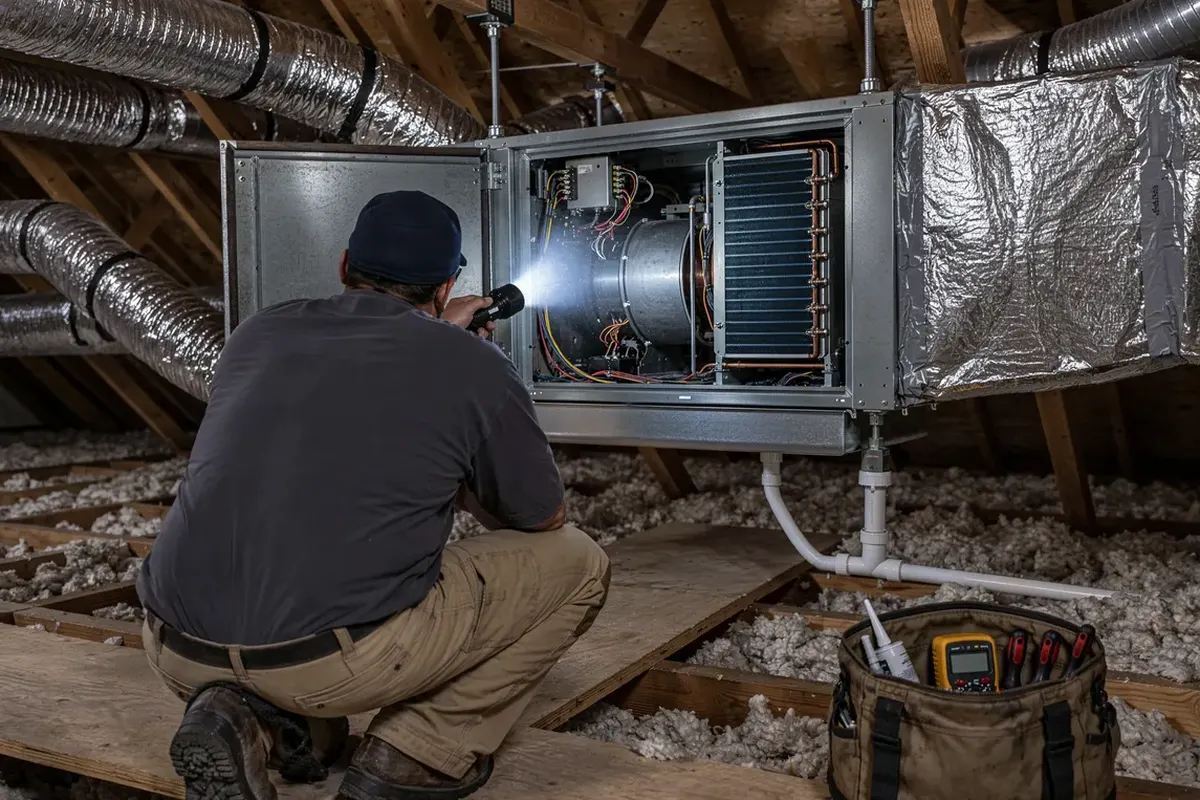
North Texas summers push air conditioners hard. NWS normals for DFW put July and August highs near 96 degrees, with roughly 20 days a year at 100 or above. Cold coils sweat, drain pans fill, and a clogged condensate line can leave water sitting in an air handler in a hot attic. Ducts that sweat in that attic add moisture of their own.
Signs worth checking
- A musty smell when the system starts
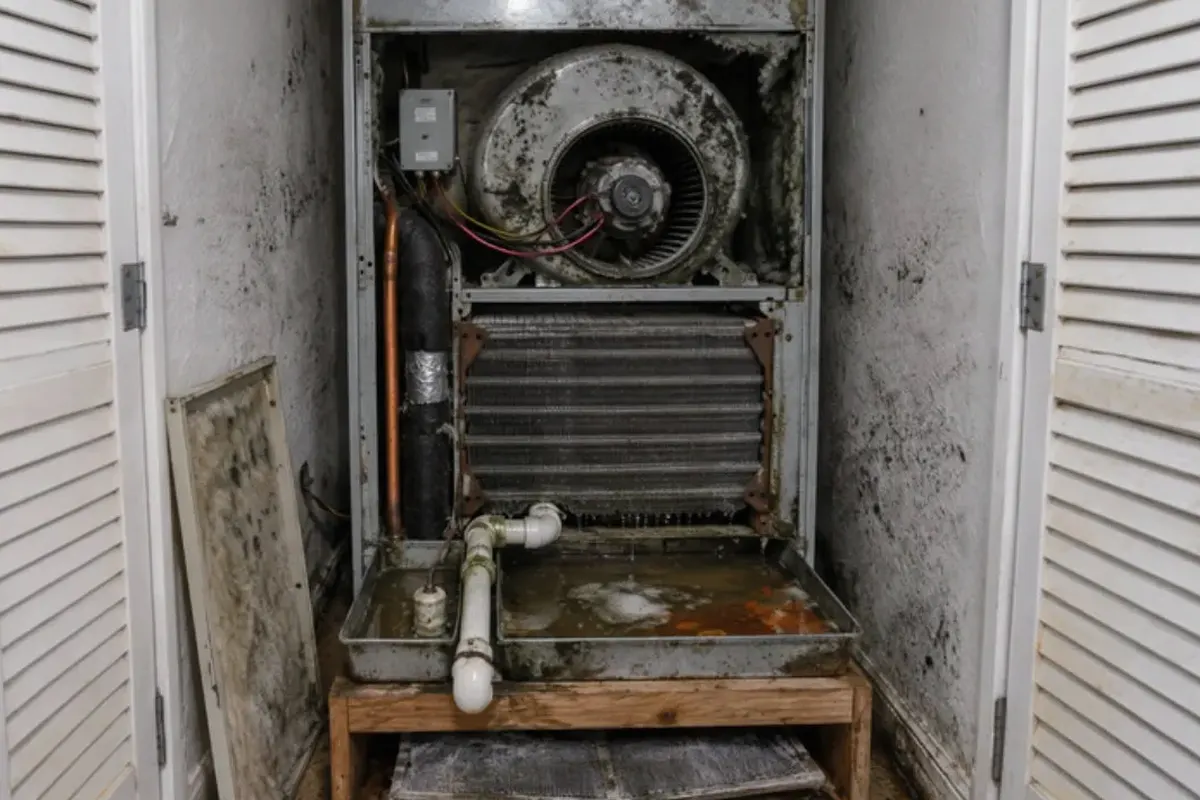
- Visible growth on vent covers, registers or around the air handler
- Water stains on ceilings under the unit or around a drain line
- Rooms that stay humid even with the AC running
What the job involves
The first step is finding where the moisture comes from, whether that is a blocked drain line, leaky duct joints, poor insulation or a return-air problem. Fixing it comes before cleaning, otherwise growth returns. Depending on the system, crews may isolate the area, clean or replace affected sections, and treat the surrounding attic or closet. Porous flex duct and wet duct board are often removed rather than scrubbed. EPA's guidance says to dry water-damaged areas and items within 24-48 hours to prevent growth, which is why a slow drip matters.
If the work involves repairing or replacing equipment, the City of Fort Worth says changing or repairing a central heating and air conditioning system requires a mechanical permit, so ask the company who handles that. A damaged attic is a related issue, covered under attic mold removal.
What it costs
One national cost guide lists HVAC or duct mold work at $2,000 to $10,000 per job, depending on system type and how far the growth has spread. That is a national estimate rather than a Fort Worth quote, and simple cases with a localized problem can fall below the low end. Get a written scope before agreeing to anything.
Licensing and the assessor rule
TDLR says a mold remediation license is required in Texas, with an exception for visible mold under 25 contiguous square feet. Duct problems are hard to measure by eye, so the project size is often unclear. TDLR also says the same person generally cannot do both the assessment and the remediation on one project, and an assessor writes a protocol that the remediation contractor's work plan follows. Check any company on TDLR's license search. A mold inspection from an independent assessor can define the scope first.
AC & Duct Mold Removal questions from Fort Worth homeowners
Can I just clean mold off my vents myself?
Is duct cleaning the same as mold removal?
Will the AC need to be shut off?
How do I stop it coming back?
Related mold services in Fort Worth
Helpful guides
AC & Duct Mold Removal in nearby cities and towns
Tarrant County
Dallas County
Denton County
Johnson County
Parker County
Ellis County
Wise County
Hood County
Sources
Last updated: