Commercial mold remediation follows the same basic path as a house: contain the area, remove what cannot be saved, dry the building and confirm the result. The difference is the extra planning for occupied space, schedules and paperwork. Call the number on this page to be connected with a local mold company in Duncanville.
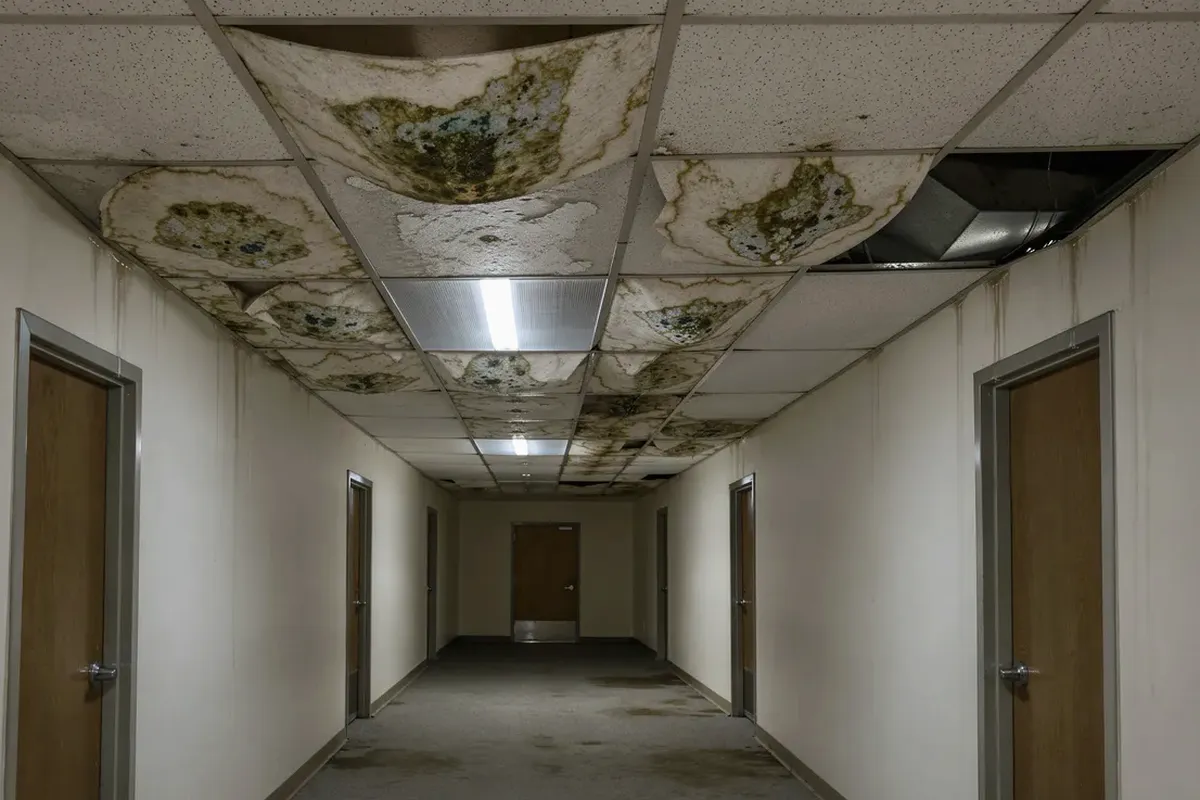
Signs a commercial space has a problem
Around Cedar Hill, the usual clues are sagging or stained ceiling tiles, peeling paint, a musty odor that returns whenever the AC runs, and dark growth along baseboards or around vents. Staff often notice the smell first. Treat it as a lead on moisture, not a housekeeping matter.
Kitchens, restrooms and plumbing
Restaurants have steam, grease, wet floors and walk-in coolers, and any of them can leave damp walls or ceilings. Restrooms and break rooms add supply lines and drain stacks. A slow leak in a chase or above a ceiling can run for months unnoticed.

Why occupied space costs more to handle
Working around customers and staff means more containment, careful staging and sometimes extra trips. Plastic barriers, negative air and separate entrances add setup. A vacant suite can be done faster, so tell the company up front how the space is used day to day.
Local details for Duncanville
Before signing, look up the company's TDLR mold license; Texas requires one for assessment or remediation projects of 25 contiguous square feet or more.
Texas generally doesn't let the same company assess and remediate the same project, so the protocol, the cleanup and the clearance check come from different businesses.
Rebuild work after the mold comes out, such as new drywall or framing, may need a permit; Duncanville's Permit & Inspection Services is the office for Duncanville addresses.
If storm runoff or creek water got inside, FEMA's flood map service and your insurer can tell you how the address is zoned.
Companies that take calls here usually also work in Cedar Hill, Grand Prairie and Midlothian.
After-hours and weekend scheduling
Restaurants, clinics and retail often prefer to have the loudest or most disruptive steps done overnight or on a slow day. Companies can sometimes stage demolition then and drying afterward. Raise your hours on the first call so the plan fits your business, not just the building.
Reporting and responding to complaints
Set up a simple path for staff, tenants or members to report odors and stains, and respond in writing. A prompt look, a clear note of what was found and a follow-up show good faith. Managers who answer early usually avoid larger disputes and larger repairs later on.
Commercial Mold Remediation questions in Duncanville
Who writes the mold protocol and who does the work in Texas?
Does a commercial job need a TDLR mold license?
Who pays when a tenant reports mold?
Do I need a permit for commercial mold work?
More mold services in Duncanville
Commercial Mold Remediation nearby
Helpful guides
Sources
Last updated: