When a Texas project passes, the remediator and assessor complete paperwork that leads to a Certificate of Mold Damage Remediation, which is worth keeping with your insurance and sale records. Call the number on this page to be connected with a local mold company in Grand Prairie.
What clearance actually is
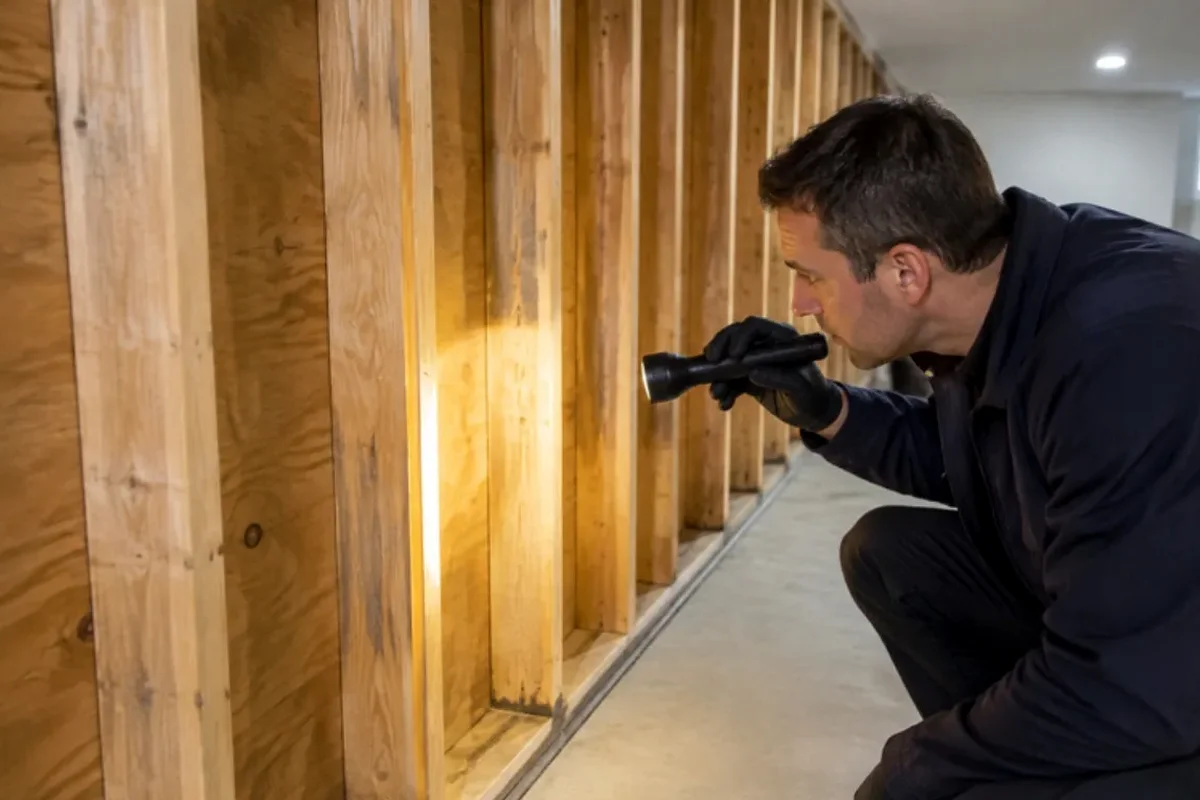
Clearance is the last step of a mold project: after the remediator finishes, a separate assessor walks the work area, checks it against the written protocol and decides whether it passes. Think of it as a fresh inspection of the cleanup, not another round of cleaning.
The visual walkthrough
The assessor starts by looking. Surfaces in the work area should be free of visible growth, dust and debris, and removed materials should be gone from the site. Any remaining staining is also noted, because it may point to moisture or to missed cleaning in that spot.
Homes near the lake shore or creek bottoms here have higher humidity from open water, so assessors compare indoor samples with an outdoor reading taken that same day near the water.
Permits and license checks in Grand Prairie
Anyone hired to assess or remediate 25 contiguous square feet or more of mold in Texas needs a TDLR mold license, and the number can be checked on the agency's license search.
Once a regulated project passes clearance, Texas law calls for a Certificate of Mold Damage Remediation, a document worth keeping with your home and insurance records.
Remediation itself is cleanup, but putting the room back together can be permitted work; ask the contractor whether Grand Prairie's Building Inspections Division needs to be involved.
Water that came in from outside raises insurance questions; FEMA's flood map search shows whether the property sits in a mapped flood zone.
Companies that take calls here usually also work in Arlington, Duncanville and Euless.
Re-checks and what they add
A failed first look means the remediator redoes the flagged areas at its own expense under many contracts, and the assessor returns for another visit. Ask in advance how a return visit is billed so a second pass does not catch you completely off guard.
Texas paperwork after a pass
For projects of 25 contiguous square feet or more, a passed clearance is what supports the Certificate of Mold Damage Remediation. The remediator and the assessor handle the forms. You receive the certificate and should file it safely with your property documents and insurance records.
Common reasons for a first fail
- Dust left after HEPA vacuuming
- Framing still reading damp
- Containment removed too early
- A missed pocket of growth
- Water source not repaired
Most of these can be addressed in a single follow-up visit, and none of them is unusual for a first attempt on a larger project.
Around Grand Prairie
Calls come in from across Grand Prairie, including around Downtown Grand Prairie, Dalworth Park, Lynn Creek Park.
Joe Pool Lake, Mountain Creek Lake and the West Fork Trinity River floodplain are all large floodplain areas within or beside Grand Prairie.
Post-Remediation Clearance Testing questions in Grand Prairie
What happens if clearance fails?
What does a clearance visit include?
What does clearance testing cost?
Can I rebuild before clearance?
More mold services in Grand Prairie
Post-Remediation Clearance Testing nearby
Helpful guides
Sources
Last updated: