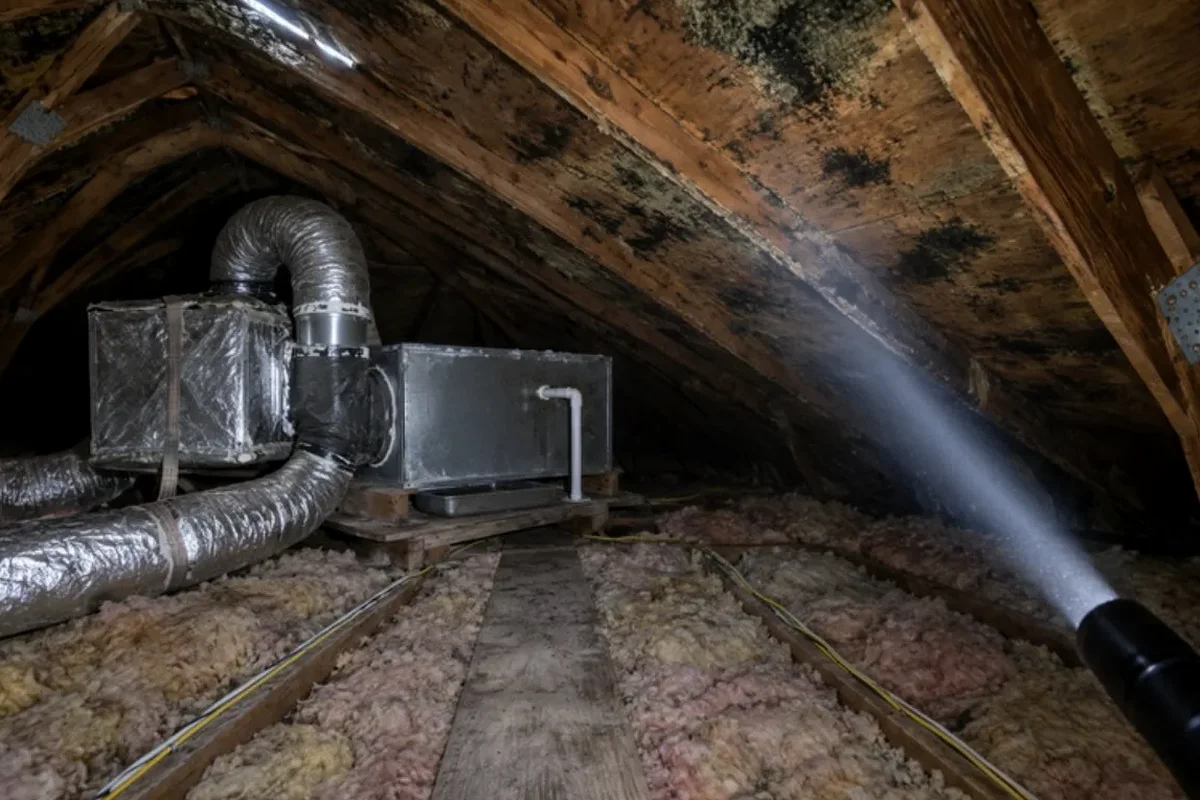
Attic mold usually grows on roof decking, rafters or insulation that stays damp, and the cause is often a roof leak, a bath fan venting into the attic or poor ventilation. Stopping the moisture matters as much as removing the growth. Call the number on this page to be connected with a local mold company in Rhome.
Quick checklist before you call
- Any ceiling stains after recent rain or hail?
- Does the hatch smell damp?
- Do bath fan ducts reach outside?
- Is insulation wet or matted?
Share your answers with the company so they can plan the visit. Write down dates of recent storms too.
Bath fans that stop short
A fan connected to a duct that ends in the attic, or a duct that has come loose, releases every shower's worth of steam right under the roof. Over months, the decking above takes on dark growth, and the insulation underneath stays damp.
On large rural lots near Rhome, detached garages, shop buildings and older outbuildings have attics or lofts that rarely get checked and can hold leaks for a long time.
Assessor and remediator are separate
Under Texas rules, one company generally cannot both assess and remediate the same job. Budget for an assessment and protocol, then a separate work plan and cleanup, and a post-remediation check when clearance applies. Compare estimates item by item.
What to prepare
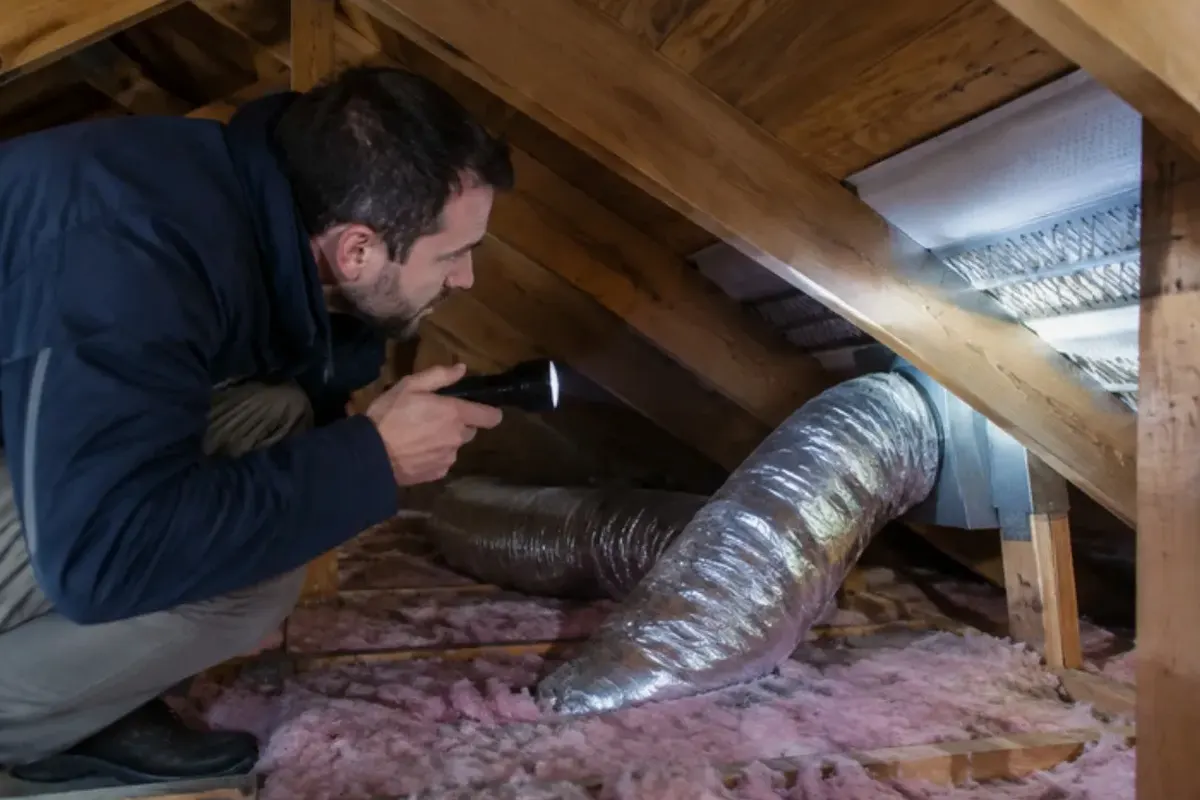
Make sure someone can open the attic hatch and that the path is clear. Move stored boxes and clothes out of the way, and note any recent roof work or storms. Keep pets and children out of the area while the hatch is open. A little prep keeps the visit short and focused.
Do not seal the problem under paint
Painting or spraying over stained wood hides the evidence but not the moisture. Encapsulants and coatings should follow cleaning, not replace it. If growth keeps returning after a treatment, look again for the water source instead of repeating the coat.
Before work starts in Rhome
Before signing, look up the company's TDLR mold license; Texas requires one for assessment or remediation projects of 25 contiguous square feet or more.
Under TDLR rules, the assessor writes the remediation protocol, the remediator follows it with its own work plan, and a separate assessor handles the post-remediation check.
Rebuild work after the mold comes out, such as new drywall or framing, may need a permit; Rhome Permitting Department is the office for Rhome addresses.
If storm runoff or creek water got inside, FEMA's flood map service and your insurer can tell you how the address is zoned.
Companies that take calls here usually also work in Azle, Boyd and Justin.
Attic Mold Removal questions in Rhome
Is attic mold dangerous to leave alone?
Will painting over mold stains work?
Do I need a Texas mold license for attic work?
Does homeowners insurance cover attic mold?
More mold services in Rhome
Attic Mold Removal nearby
Helpful guides
Sources
Last updated: