Small, surface-level growth under about 10 square feet is something many homeowners clean themselves, per EPA guidance. Larger areas, or mold inside walls after a pipe break, are usually a job for a company. Call the number on this page to be connected with a local mold company in Rhome.
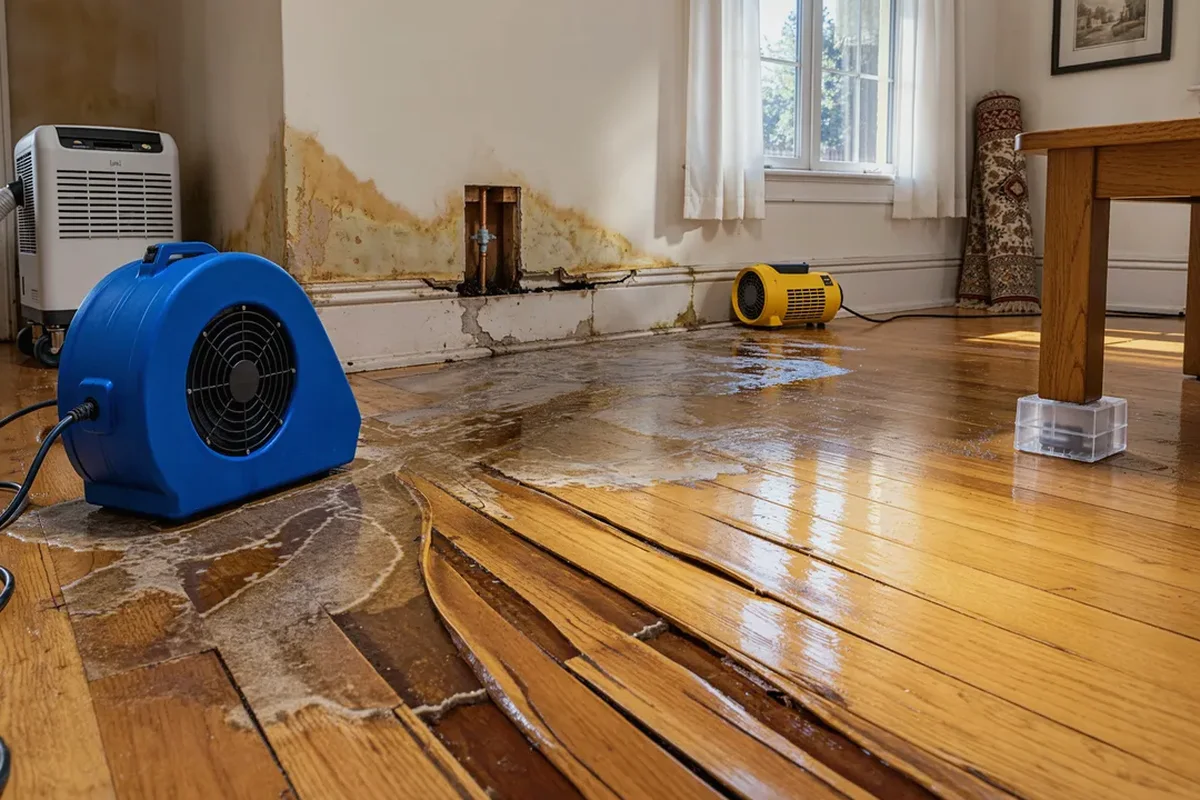
When damp turns into growth
Wet drywall, insulation and carpet pad can start growing mold within a couple of days if they stay damp. Surface stains may be only the visible edge. Behind the paint, the backing paper and the stud cavity are often darker, so a stain deserves a proper look.
Why the source decides the plan
A roof leak wets the attic and upper walls. A slab leak wets the floor and lower walls. An AC drain wets a ceiling. Knowing where the water came from tells a company where to open up, what to dry and which materials are likely to need removal.
Homes with barns, shops and well houses outside Rhome have more plumbing to watch. Freeze damage in unheated outbuildings is easy to miss until spring.
What raises or lowers the scope
Quick action keeps things much smaller. A leak caught in a day may need drying only. One left for weeks can mean opened walls, new insulation and replaced flooring. The longer materials stay wet, the more of them become removal items instead of drying items.
Step by step on a typical job
First the water source is stopped and the area is isolated. Wet, moldy material is cut out and bagged. Surfaces are cleaned and HEPA vacuumed, then dried with fans and dehumidifiers. Moisture readings confirm the dry-out before anything is closed back up or rebuilt.
When to stop DIY
A homeowner can usually handle a patch smaller than about 10 square feet on hard surfaces. Then move to a company when mold is on drywall, inside walls, across more than one room or keeps returning. Wear a mask and avoid stirring dust either way. Keep pets away.
Who handles what in Rhome
The state draws its line at 25 contiguous square feet: above that, the assessor and the remediator both need a TDLR mold license. TDLR's online search shows whether a license is current.
Texas generally doesn't let the same company assess and remediate the same project, so the protocol, the cleanup and the clearance check come from different businesses.
If the job grows into replacing drywall, cabinets or framing, ask whether the rebuild needs a permit from Rhome Permitting Department.
Water that came in from outside raises insurance questions; FEMA's flood map search shows whether the property sits in a mapped flood zone.
Nearby, the same kind of help is available in Azle, Boyd and Justin.
Leak & Burst Pipe Mold Removal questions in Rhome
Do I need to fix the leak before mold removal?
Does bleach kill mold after a leak?
Does Texas require a license for mold work?
Can the same company test and remove the mold?
More mold services in Rhome
Leak & Burst Pipe Mold Removal nearby
Helpful guides
Sources
Last updated: